One of the things I didn’t expect to miss during my transition out of daily rhythm of the newsroom was the editorial meeting.
Not the calendar invite. Not the slide deck.
The room.
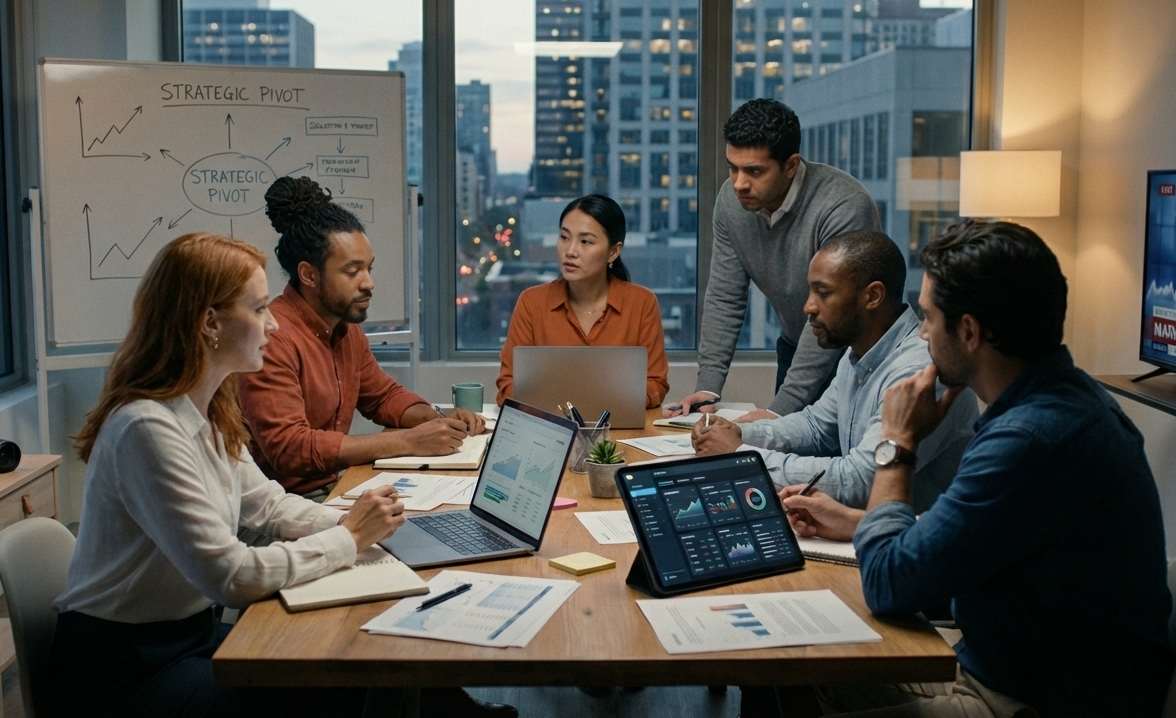
I miss the rhythm of gathering a team to look at what we’d built, what was unfolding around us and what we might create next.
Over time, I realized the meeting wasn’t just a discussion, it was infrastructure. These gatherings were our operating system, the place where strategy stopped being abstract and became shared judgment.
We Started With the Work
Most meetings opened with a recap of the previous production cycle. What did we publish or produce? What traveled further than expected? What didn’t land the way we thought it would?
We reviewed KPIs and analytics, but not as a scoreboard. The goal wasn’t to defend numbers. It was to understand behavior. Who showed up? Who didn’t? What held attention? What prompted response?
Metrics gave us signal, the conversation gave it meaning.
Sometimes the most valuable insight wasn’t the highest-performing piece. It was a story that resonated deeply with a specific audience we wanted to serve better. Those moments kept performance tied to purpose.
Then We Zoomed Out
After reviewing our own work, we widened the lens. What was trending locally, regionally, nationally? How were competitors covering those topics? Where was coverage saturated? Where was it thin?
In markets like the Bay Area, context shifts quickly. Fires, public safety, tech policy, housing, weather — breaking news is rarely quiet for long. But scanning the landscape wasn’t just defensive. It showed us where the real openings were. Saturated coverage told us where to step back. Thin coverage told us where audiences were underserved. That gap is usually where the most interesting work lives.
Some of our most innovative work at KRON and ABC 10News grew directly out of those conversations. An idea might begin with a simple question: how can we help audiences understand this issue more clearly? But answering that question sometimes pushed us beyond our existing skill set. That’s how we developed new approaches to data visualization, deepened investigative reporting, experimented with social-first production, and expanded into podcasting.
Innovation didn’t start with tools…it started with purpose.
When the Agenda Disappeared
Of course, not every meeting followed the agenda.
In newsrooms, there are days when everything you planned dissolves in minutes. We’ve scrapped entire scripts. Re-routed reporters mid-assignment. Redirected crews to breaking crime scenes, protests, COVID developments, natural disasters, major traffic events.
On those days, the meeting became triage. Reporters joined by phone or Zoom from the field. Producers gathered in the newsroom. Information moved quickly and often incompletely.
The most important thing in those moments wasn’t authority. It was clarity. We needed space for everyone to contribute what they were seeing and hearing. We needed room for debate, especially when tension was high and information overwhelming. And we needed to make decisions quickly without shutting down input.
A safe room matters most when the pressure rises.
Sometimes they were messy, too. The operating system held because people trusted it.
Skill Building Was Part of the Rhythm
Some days, we carved out time for skill-building. A producer might walk through a new workflow. A reporter might explain how they sourced a complex investigation. A digital editor might demonstrate a tool that improved distribution.
These weren’t formal trainings, they were shared literacy.
When teams stretch into new territory — investigative reporting, multimedia storytelling, live production — shared understanding lowers friction and builds confidence.
Over time, those conversations compounded. Growth became part of the culture, not a separate initiative.
The Back Half Was for Ideas
We reserved the latter portion of the meeting for pitching. Anyone could bring an idea: daily coverage, enterprise, investigative work, special projects. But every pitch had to answer two questions: what’s the “why,” and how does this live beyond a single platform?
At The San Jose Mercury News, a question came up that seemed simple on the surface: how do we cover community events in a way that actually helps people feel informed and ready to act? The answer surprised us. We assembled a small team, set up cameras, ran audio, managed a live stream. It wasn’t traditional field production, but it was exactly right for what the story and our audience needed.
That’s what the pitch process was built to surface. The “why” forced clarity: why now, why this audience, why does this matter in the current moment?
The second question ensured we weren’t thinking in silos. A strong story could extend into digital depth, anchor a newsletter, drive social engagement, or evolve into a community conversation. The format should follow the purpose, not the other way around.
Capacity and Clarity Mattered
Not every idea moved forward. Part of running a healthy editorial system is being honest about capacity. Do we have the resources to execute this well? What gets deprioritized if we say yes? Who owns this? What’s the timeline?
Clear decisions prevented drift, ownership prevented confusion.
We learned to hold both the creative and the practical. A team that could sprint into breaking news and still return to a long-form investigation the next week wasn’t lucky — they’d practiced the transitions enough that neither mode felt like an interruption of the other.
What I Miss Most
Looking back, those meetings did more than produce stories. They reinforced standards. They built shared judgment. They connected metrics to mission. They made strategy visible in real time.
Most importantly, they created alignment through participation, not instruction.
That’s what I miss most … the collective clarity that forms when thoughtful people wrestle with what matters and why.
Even outside of a daily newsroom rhythm, I still think in that structure: review the work, study the landscape, build shared skills, clarify the “why,” design for reach and relevance.
The room may change, the platforms may evolve. But the operating system holds.